


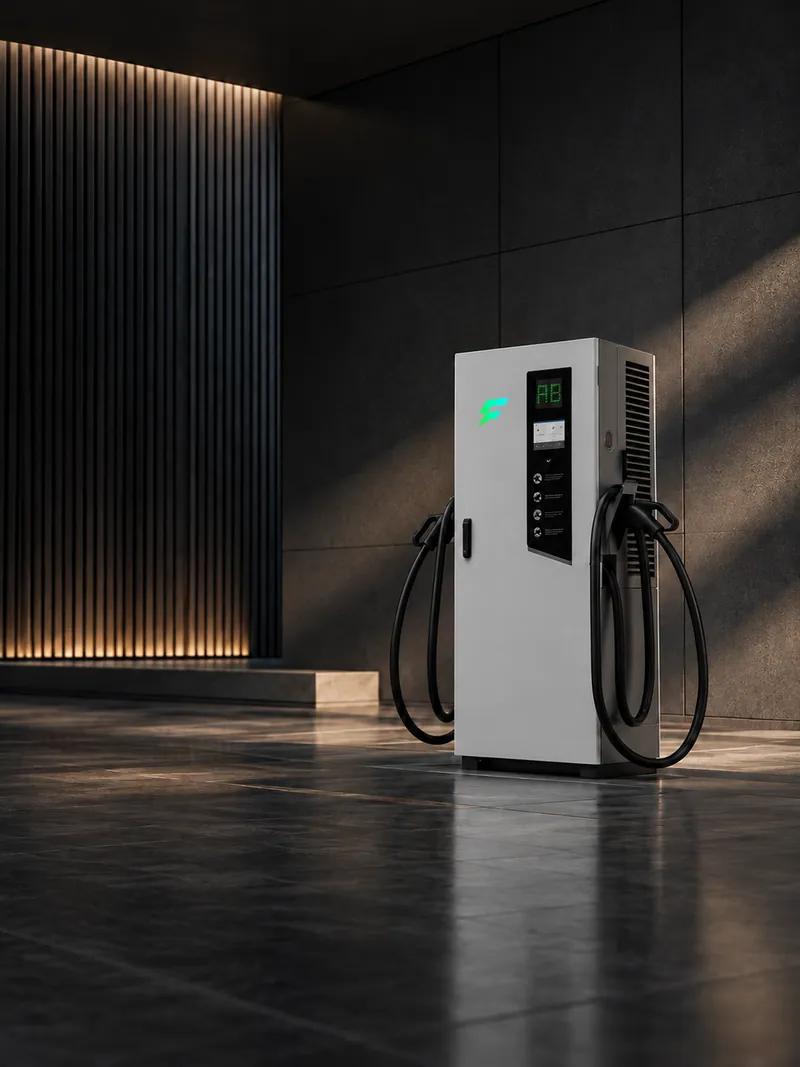
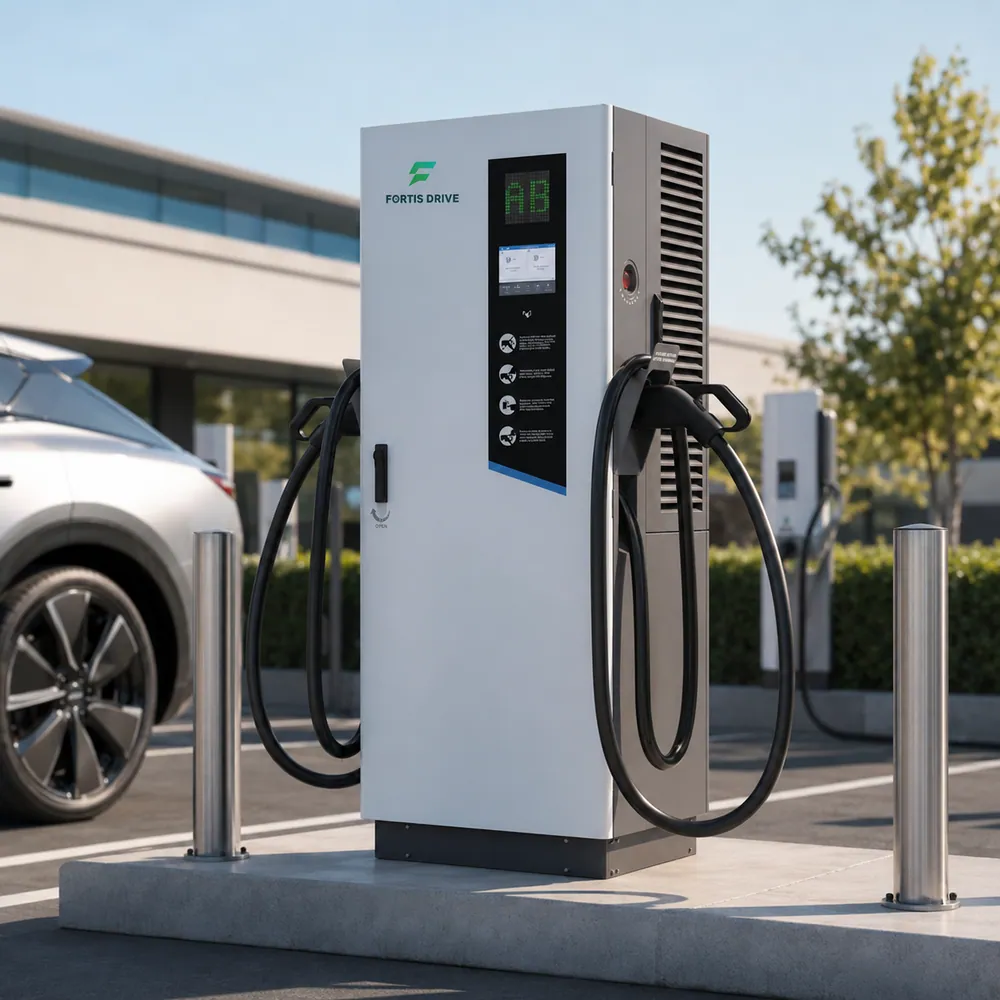
Configurable 60 to 160 kW Platform
Choose 60, 80, 120 or 160 kW within one product family. This gives operators and distributors a clearer way to match charger capacity to site power, vehicle demand and deployment type.

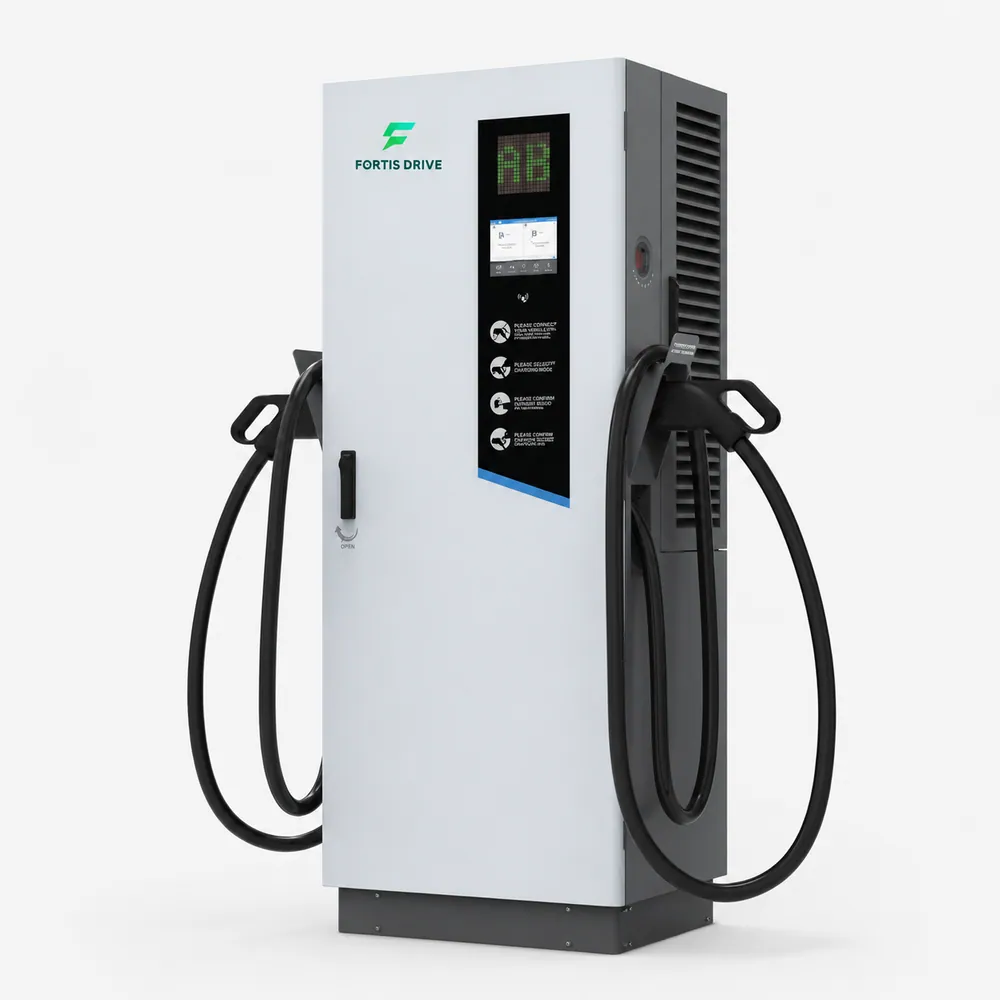
Four Power Levels, One Charging Platform
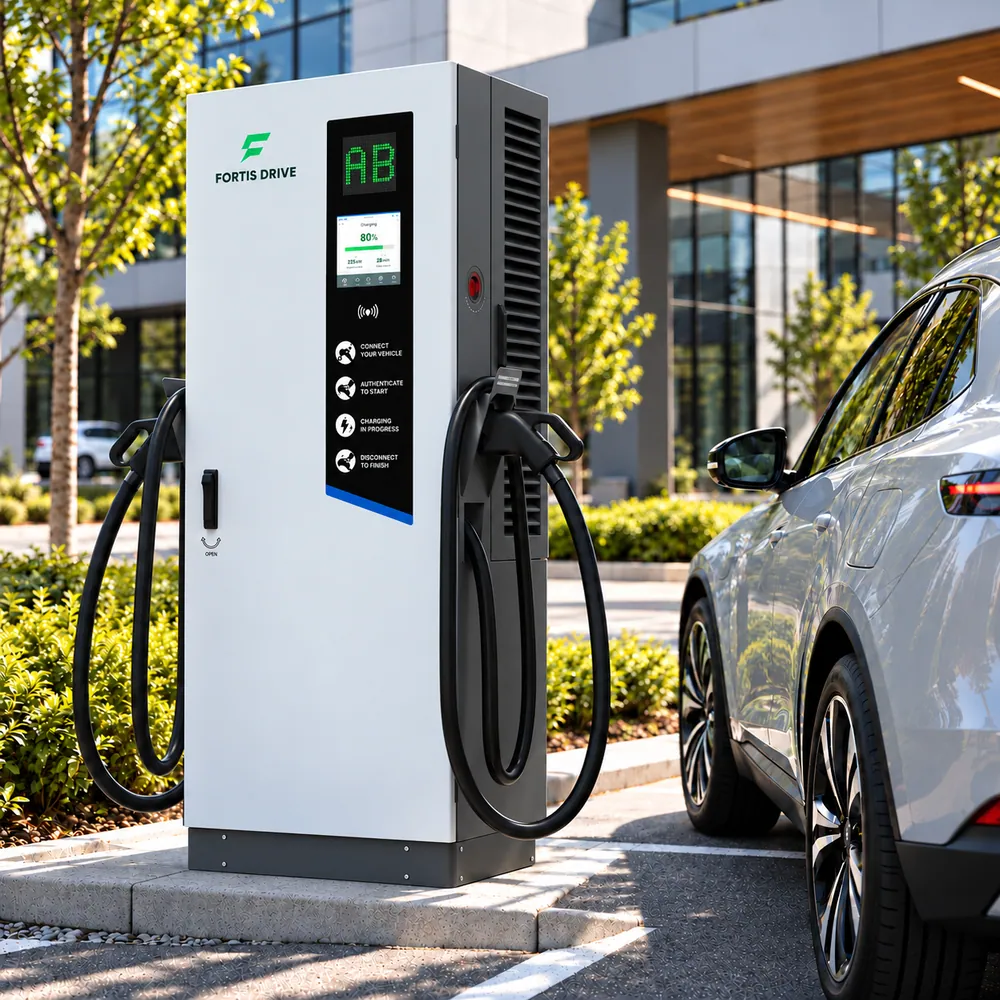
The Fortis Core DC EV charger is a configurable freestanding platform for commercial locations that need more choice than a single fixed-power unit. Select 60, 80, 120 or 160 kW, then define the charging outputs, connector standard, user access, communications, branding, documentation and packaging around your project.
Fortis Drive helps buyers identify the testing, documentation and certification requirements relevant to the selected configuration and destination country.





Fortis Core is manufactured for businesses that need a compact commercial DC EV charger with a clear technical specification, controlled production and support for repeat orders.
Add scheduled DC charging at airports, logistics facilities, passenger terminals and other transport sites where vehicles need useful energy during shorter dwell periods. Connector choice and site electrical capacity should be confirmed before production.
Support passenger-car, rental, delivery and corporate fleets that need faster turnaround than typical AC charging can provide. The 60 - 160 kW output suits operational charging where dwell time, route planning and available electrical capacity must be balanced.
Prepare demonstration vehicles, customer handovers and workshop vehicles without allocating space to a high-power charging cabinet. Enclosure branding, labels, interface details and documentation can be adapted for dealership programs.
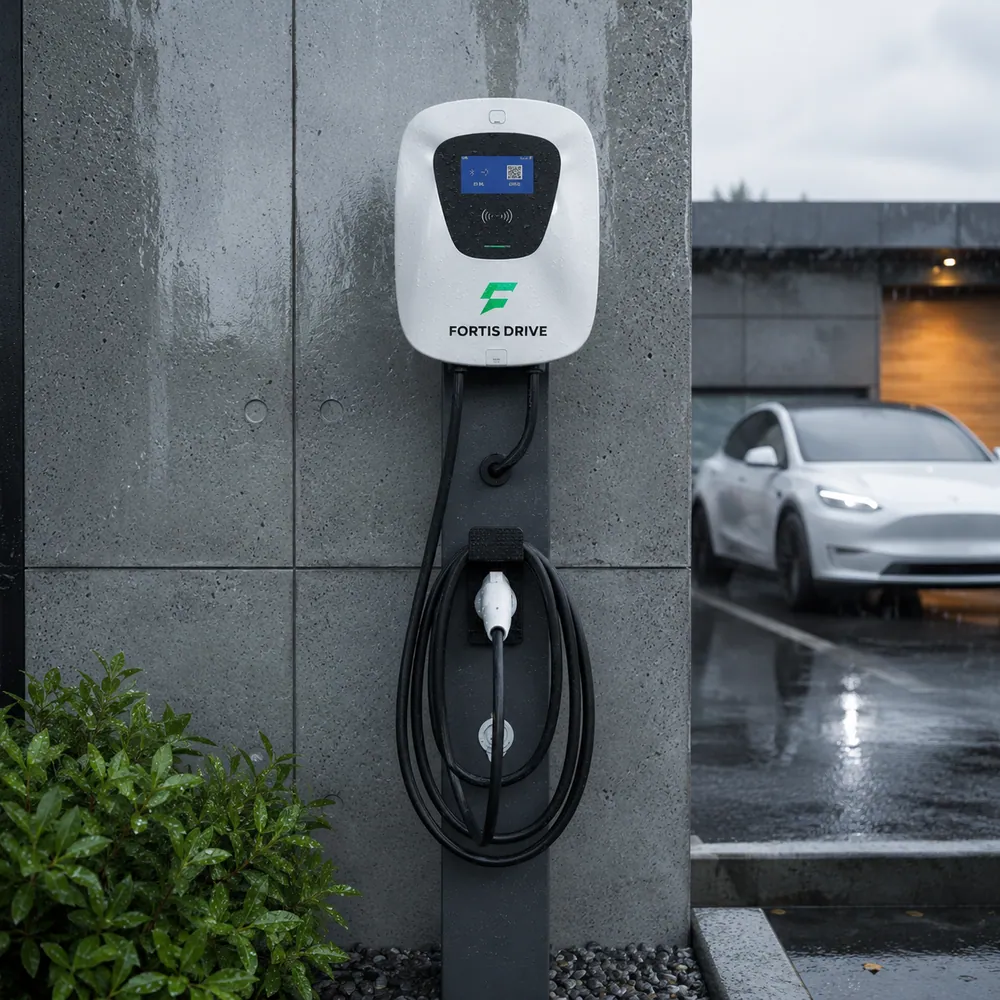
Restore battery charge between inspection, diagnostics, repair and delivery stages. A wall-mounted configuration can preserve floor space in workshops where equipment access and vehicle movement matter.
Configure charging equipment around local connector standards, procurement documentation, fleet schedules and installation environments. Fortis Drive supports manufacturing, quality-control checkpoints, packaging and international delivery.
Add a compact 60 - 160 kW DC EV charger to workplace, commercial parking, destination-charging or private-network projects. OCPP 1.6J supports integration planning with a compatible charging-station management system.
Choose 60, 80, 120 or 160 kW within one product family. This gives operators and distributors a clearer way to match charger capacity to site power, vehicle demand and deployment type.
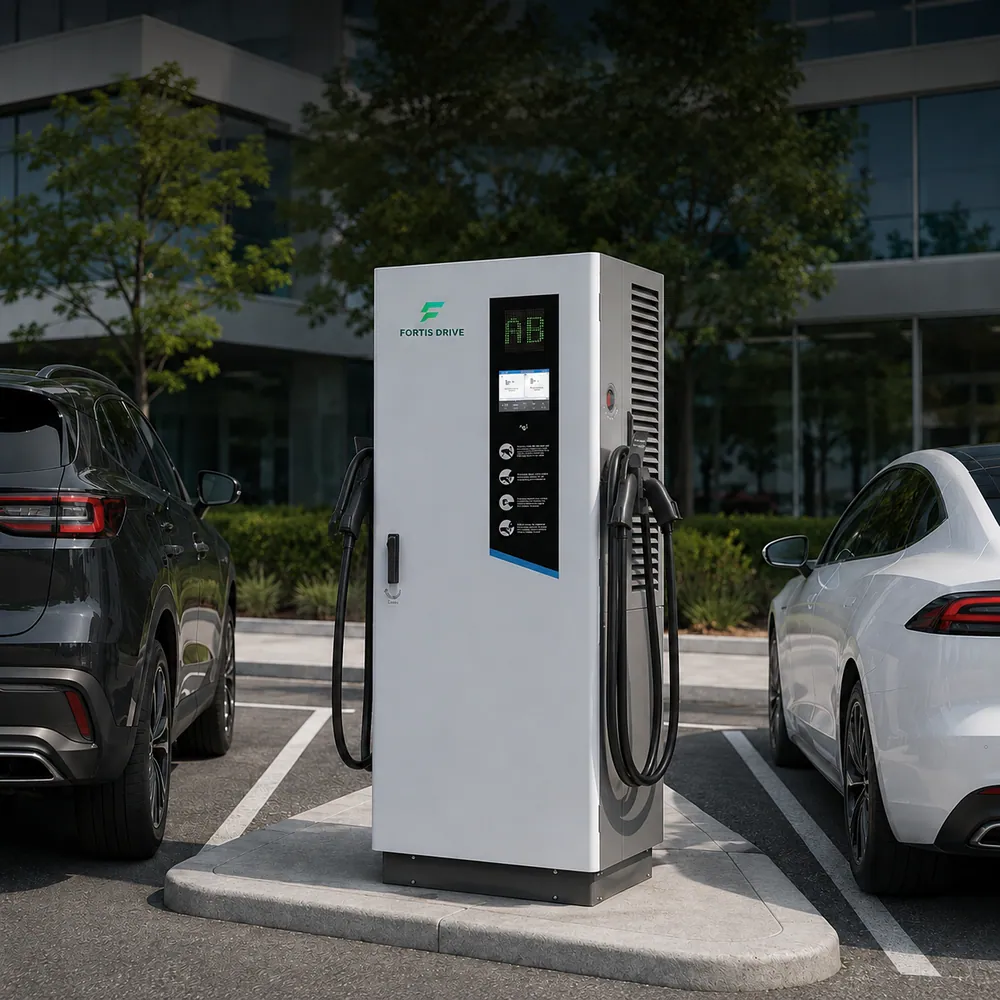
Specify one or two outputs according to the site layout and planned vehicle flow. Connector arrangement and power behavior are defined during engineering review so the manufactured unit matches the approved operating brief.
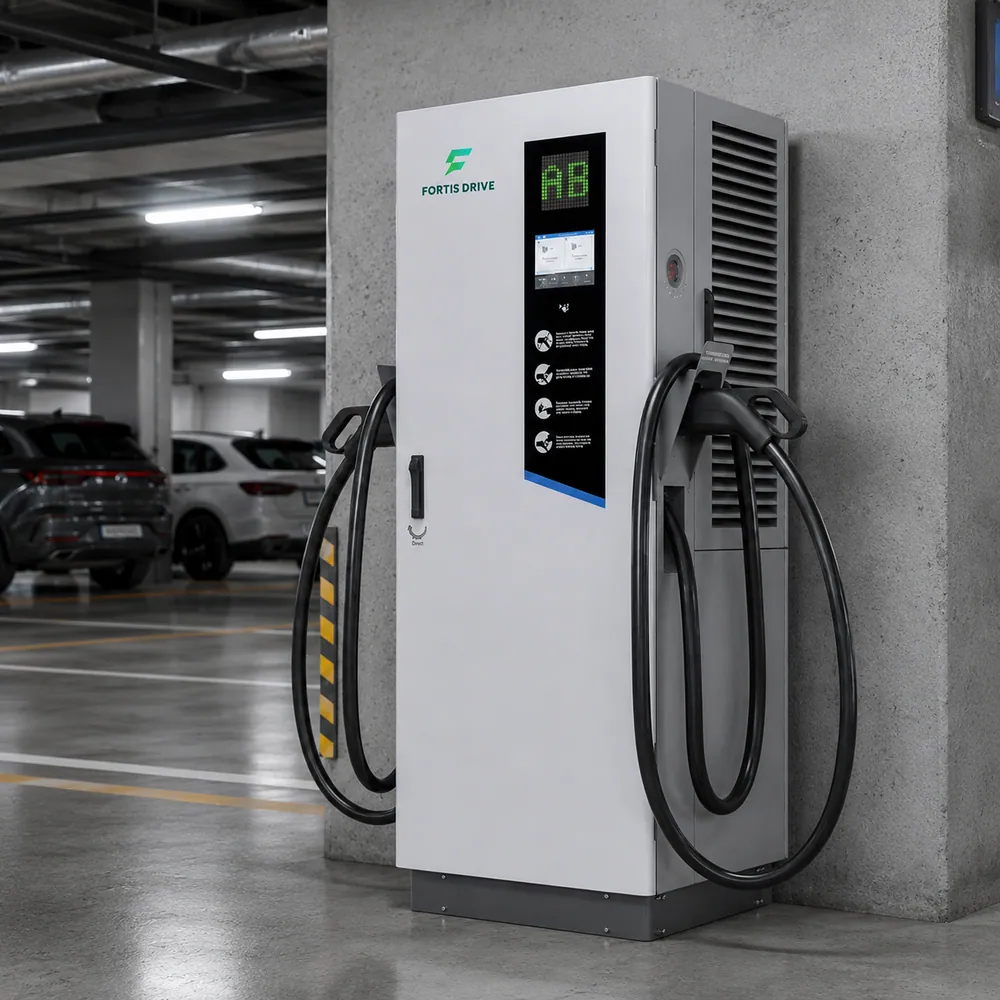
User identification can be configured with optional RFID or app-based access. The required authentication method, backend relationship and user journey should be confirmed before production.
Swipe sideways to compare models
| Specification | Fortis Flex | Fortis Slim | Fortis Core | Fortis Ultra |
|---|---|---|---|---|
| Power Supply | 30kW | 60kW | 60kW | 80kW | 120kW | 160kW | 120kW | 180kW | 240kW |
| Connector | CCS1 | CCS2 | CHAdeMO | CCS1 | CCS2 | CHAdeMO | CCS1 | CCS2 | CHAdeMO | CCS1 | CCS2 | CHAdeMO |
| Mounting | Wall-mount | Stand-mount | 1 or 2 | 1 or 2 | 1 or 2 |
| Application | Indoor & outdoor | Free standing | Free standing | Free standing |
| LCD Display | 4.3 inch color touch screen | 7'' color touch screen | 7'' color touch screen | 7'' color touch screen |
| IP, IK Level | IP54, IK10 | IP54, IK10 | IP54, IK10 | IP54, IK10 |
| Backend Protocol | OCPP 1.6J | OCPP 1.6J | OCPP 1.6J | OCPP 1.6J |
| Communication | Bluetooth / Wi-Fi / Ethernet (4G optional) | Ethernet (4G optional) | Ethernet (4G optional) | Ethernet (4G optional) |
| Current | 100A | 200A (250A optional) | 200A (250A optional) | 200A (250A optional) |
| Voltage | 150V DC -1000V DC | 150V DC -1000V DC | 150V DC -1000V DC | 150V DC -1000V DC |
| Cable | 5m (customizable) | 5m (customizable) | 5m (customizable) | 5m (customizable) |
Each custom EV charger can be configured with private-label branding, enclosure finishes, connector options, cable requirements, interface details, labels, manuals and packaging. All changes are reviewed for technical feasibility, testing and destination-market requirements.
A six-stage process keeps the approved configuration visible from the initial electrical brief through manufacturing, inspection, packaging and export.
Step 1
Fortis Drive translates the buyer's commercial and technical inputs into a defined charger requirement. The review covers destination country, intended application, available electrical supply, target vehicles, connector standard, mounting location, connectivity, branding, quantity and documentation.
Step 1
Fortis Drive translates the buyer's commercial and technical inputs into a defined charger requirement. The review covers destination country, intended application, available electrical supply, target vehicles, connector standard, mounting location, connectivity, branding, quantity and documentation.
As a China-based DC fast charger manufacturer, Fortis Drive connects engineering decisions, component integration, assembly, quality control, packaging and export within one manufacturing program.
The connector, electrical range, communications, cable, enclosure, software interface, branding and packaging are managed against one approved specification. That gives B2B buyers clearer control as the project moves from sample to commercial production.
Not every requested change should reach the production line. Fortis Drive reviews customization against engineering feasibility, tooling, order volume, testing, documentation, cost and repeat-order practicality before the configuration is approved.
Manufacturing, inspection checkpoints, packaging and export preparation remain connected. Buyers have defined approval points and one accountable team for the physical product from the first brief through shipment.
Find practical answers about selecting, configuring, and manufacturing Fortis Core DC EV chargers.
Trusted by EV Charging Businesses Worldwide
Fortis Drive turned our technical requirements into a clear manufacturing plan. The team asked the right questions early, kept every specification visible and developed a charger configuration that aligned with our market.
 Michael TorresFleet Procurement Manager
We needed more than a standard charging unit. Fortis Drive worked through the connector options, branding, documentation and packaging with us, then carried the approved specification into production with impressive attention to detail.
 Sarah ChenEV Charging Solutions Director
Communication stayed practical from the initial configuration review through production and shipment. We always knew what required approval, what stage the order had reached and which documents would accompany the chargers.
 Daniel WeberCommercial Infrastructure Manager
Receive a Quality Quote within 24 Hours.
Upload Your Specification for Custom Requirements